Ditapis dengan

Sejarah Ringkas Filsafat Cina (Sejak Confucius Sampai Han Fei Tzu)
- Edisi
- -
- ISBN/ISSN
- 9794990558
- Deskripsi Fisik
- viii + 221 hlm.; 21 cm.
- Judul Seri
- -
- No. Panggil
- 181.11 FUN s
- Edisi
- -
- ISBN/ISSN
- 9794990558
- Deskripsi Fisik
- viii + 221 hlm.; 21 cm.
- Judul Seri
- -
- No. Panggil
- 181.11 FUN s

The Wisdom of Confucius
- Edisi
- -
- ISBN/ISSN
- 0806522879
- Deskripsi Fisik
- 197 pg.; 21 cm.
- Judul Seri
- -
- No. Panggil
- 181 WIS w
- Edisi
- -
- ISBN/ISSN
- 0806522879
- Deskripsi Fisik
- 197 pg.; 21 cm.
- Judul Seri
- -
- No. Panggil
- 181 WIS w
The Wisdom Of Gandhi
- Edisi
- -
- ISBN/ISSN
- 0806522542
- Deskripsi Fisik
- 159 pg.; 21 cm.
- Judul Seri
- -
- No. Panggil
- 181 SET w
- Edisi
- -
- ISBN/ISSN
- 0806522542
- Deskripsi Fisik
- 159 pg.; 21 cm.
- Judul Seri
- -
- No. Panggil
- 181 SET w
Alam Pikiran Yunani II
- Edisi
- -
- ISBN/ISSN
- -
- Deskripsi Fisik
- viii + 90 hlm.; 22 cm.
- Judul Seri
- -
- No. Panggil
- 180.2 HAT a 2
- Edisi
- -
- ISBN/ISSN
- -
- Deskripsi Fisik
- viii + 90 hlm.; 22 cm.
- Judul Seri
- -
- No. Panggil
- 180.2 HAT a 2

Alam Pikiran Yunani I
Ada dua jalan untuk mencapai pengetahuan tentang filosofi. Pertama, menanamkan pengertian secara berangsur-angsur labih dahulu, dari yang agak mudah sampai kepada yang sulit-sulit benar, dan mempelajari susunan pengetahuan itu didalam sistemnya. Berbagai pertikaian paham diketahui dengan jalan ini sejak semulanya. Inilah jalan yang sebaik-baiknya bagi orang yang memilih filosofi sebagai faknya.…
- Edisi
- -
- ISBN/ISSN
- -
- Deskripsi Fisik
- viii + 54 hlm.; 22 cm.
- Judul Seri
- -
- No. Panggil
- 180.2 HAT a 1
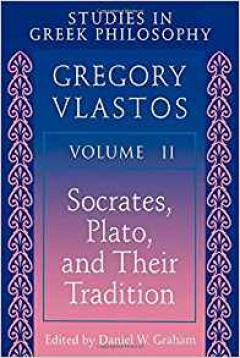
Studies In Philosophy Volume II : Socrates, Plato, And Their Tradition
Gregory Vlastos (1907-1991) was one of the twentieth century's most influential scholars of ancient philosophy. Over a span of more than fifty years, he published essays and book reviews that established his place as a leading authority on early Greek philosophy. The two volumes that comprise Studies in Greek Philosophy include nearly forty contributions by this acknowledged master of the philo…
- Edisi
- -
- ISBN/ISSN
- 0691033110
- Deskripsi Fisik
- xxiv + 349 pg.; 23,5 cm.
- Judul Seri
- -
- No. Panggil
- 180 VLA s 2

Sejarah Filsafat
- Edisi
- -
- ISBN/ISSN
- -
- Deskripsi Fisik
- xix + 589 hlm.; 23,5 cm.
- Judul Seri
- -
- No. Panggil
- 109 SOL s
- Edisi
- -
- ISBN/ISSN
- -
- Deskripsi Fisik
- xix + 589 hlm.; 23,5 cm.
- Judul Seri
- -
- No. Panggil
- 109 SOL s

Sejarah Pemikiran Politik Yunani dan Romawi
Inilah buku pertama yang membahas pemikiran politik Yunani dan Romawi kuno secara menyeluruh yang pernah diterbitkan dalam bahasa Indonesia. Pembahasannya mencakup mulai dari Homer sampai era Kristen dan Pagan. Para tokoh-tokoh besar di bidang politik dengan beragam latar belakang penyair, sejarawan, filsuf; seperti Plato, Aristoteles, Seneca hingga Augustinus dijelaskan secara komprehensif dis…
- Edisi
- -
- ISBN/ISSN
- 9794218529
- Deskripsi Fisik
- xxviii + 882 hlm.; 21 cm.
- Judul Seri
- -
- No. Panggil
- 180 ROW s

The Meeting of East and West : An Inquiry Concerning World Understanding
The impact of Eastern thought on the culture of the United States and Western Europe is now seen in the spread of Buddhism, meditation, martial arts, yoga, oriental art, and hundreds of other Asian imports. F. S. C. Northrop in this perceptive work was one of the first Americans to grasp the full significance of Eastern culture, its distinctive features, and its potential for influencing the re…
- Edisi
- First Edition
- ISBN/ISSN
- -
- Deskripsi Fisik
- xxii + 531 pg.: ils.; 21 cm.
- Judul Seri
- -
- No. Panggil
- 180
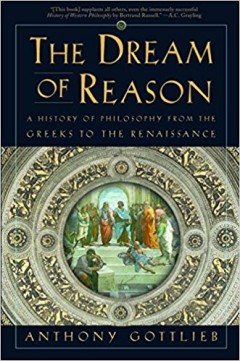
The Dream of Reason: A History of Philosophy From The Greeks to The Renaissance
Already a classic in its first year of publication, this landmark study of Western thought takes a fresh look at the writings of the great thinkers of classic philosophy and questions many pieces of conventional wisdom. The book invites comparison with Bertrand Russell's monumental History of Western Philosophy, "but Gottlieb's book is less idiosyncratic and based on more recent scholarship" (C…
- Edisi
- -
- ISBN/ISSN
- 039332365X
- Deskripsi Fisik
- x + 469 pg.; 23,5 cm.
- Judul Seri
- -
- No. Panggil
- 180 GOT d
 Karya Umum
  Filsafat
  Agama
Agama  Ilmu-ilmu Sosial
  Bahasa
  Ilmu-ilmu Murni
  Ilmu-ilmu Terapan
  Kesenian, Hiburan, dan Olahraga
  Kesusastraan
  Geografi dan Sejarah