Ditapis dengan
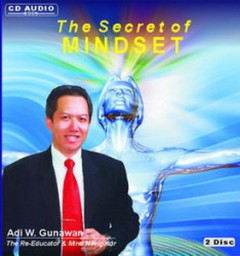
The Secret Of Mindset
Pikiran manusia dikatakan dapat meramalkan masa depan atau nasib manusia, menyelesaikan masalah dan menyembuhkan. Pikiran merupakan sebuah alat yang sangat luar biasa yang diberikan Tuhan kepada kita untuk membantu mencapai semua yang kita inginkan. Mempelajari cara kerja pikiran dan cara memprogram pikiran, akan memberikan kita kekuatan yang sangat dahsyat. Bersama, kita pelajari bagaimana men…
- Edisi
- -
- ISBN/ISSN
- 9789792234237
- Deskripsi Fisik
- xx + 273 hlm.; 23 cm.
- Judul Seri
- -
- No. Panggil
- 150 GUN s

Meditations on First Philosophy: With Selections from the Objections and Replies
This authoritative translation by John Cottingham of the Meditations is taken from the much acclaimed three-volume Cambridge edition of the Philosophical Writings of Descartes. It is based on the best available texts and presents Descartes' central metaphysical writings in clear, readable modern English.
- Edisi
- Revised Edition
- ISBN/ISSN
- 0521552524
- Deskripsi Fisik
- xlvi + 120 pg.; 23 cm.
- Judul Seri
- -
- No. Panggil
- 194 DES m.a
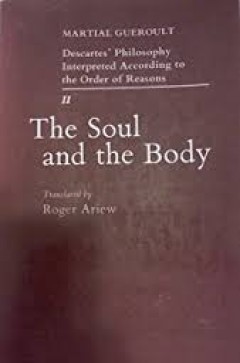
Descartes' Philosophy Interpreted According to the Order of Reasons Volume II…
- Edisi
- -
- ISBN/ISSN
- 0816612579
- Deskripsi Fisik
- 311 pg.; 23 cm.
- Judul Seri
- -
- No. Panggil
- 194 GUE d 2
- Edisi
- -
- ISBN/ISSN
- 0816612579
- Deskripsi Fisik
- 311 pg.; 23 cm.
- Judul Seri
- -
- No. Panggil
- 194 GUE d 2
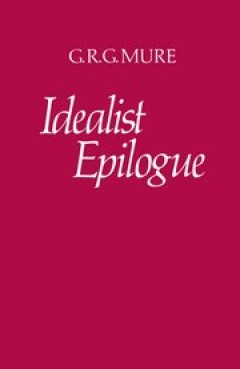
Idealist Epilogue
The author is not sure that his philosophical career merits an epilogue, but he had an itch to write one, and he thought of composing it in dialogue form, mainly for brevity's sake but also in the hope of imparting a touch of vitality. Yet writers of philosophical dialogue, except Plato, commonly leave one feeling that they would have served their purpose better by straight exposition, or by so…
- Edisi
- -
- ISBN/ISSN
- 0198245831
- Deskripsi Fisik
- 180 pg.; 22 cm.
- Judul Seri
- -
- No. Panggil
- 192 MUR i

Locke: An Introduction
Originally published in 1969, the impetus for this collection came from a conference on the Thought of John Locke held at York University, Toronto in 1966. Written in the co-operative spirit of the conference, the essays collected here were intended to reflect Locke's position as a polymath and recontextualise his ideas through the juxtaposition of various academic approaches. In doing so, they…
- Edisi
- -
- ISBN/ISSN
- 0631133763
- Deskripsi Fisik
- xii + 162 pg.; 23 cm.
- Judul Seri
- -
- No. Panggil
- 192 YOL l
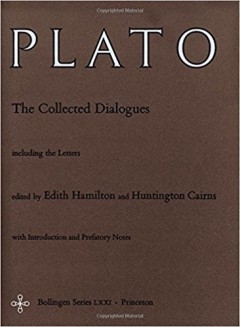
The Collected Dialogues of Plato: Including the Letters
All the writings of Plato generally considered to be authentic are here presented in the only complete one-volume Plato available in English. The editors set out to choose the contents of this collected edition from the work of the best British and American translators of the last 100 years, ranging from Jowett (1871) to scholars of the present day. The volume contains prefatory notes to each d…
- Edisi
- -
- ISBN/ISSN
- 0691097186
- Deskripsi Fisik
- xxv + 1743 pg.; 23 cm.
- Judul Seri
- Bollingen Series LXXi
- No. Panggil
- 184 COL c

Metaphysics
- Edisi
- -
- ISBN/ISSN
- -
- Deskripsi Fisik
- xiv + 107 pg.; 23 cm.
- Judul Seri
- Foundation of Philosophy Series
- No. Panggil
- 110 TAY m
- Edisi
- -
- ISBN/ISSN
- -
- Deskripsi Fisik
- xiv + 107 pg.; 23 cm.
- Judul Seri
- Foundation of Philosophy Series
- No. Panggil
- 110 TAY m
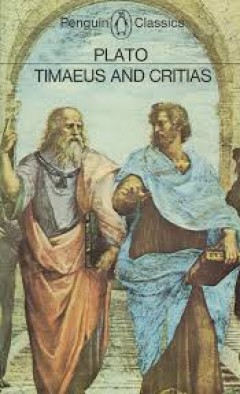
Timaeus and Critias
Timaeus and Critias is a Socratic dialogue in two parts. A response to an account of an ideal state told by Socrates, it begins with Timaeus’s theoretical exposition of the cosmos and his story describing the creation of the universe, from its very beginning to the coming of man. Timaeus introduces the idea of a creator God and speculates on the structure and composition of the physical world…
- Edisi
- -
- ISBN/ISSN
- -
- Deskripsi Fisik
- 167 pg.; 20 cm.
- Judul Seri
- -
- No. Panggil
- 184 PLA t
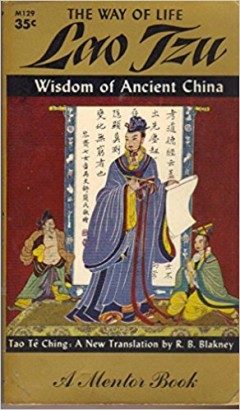
The Way of Life
- Edisi
- -
- ISBN/ISSN
- -
- Deskripsi Fisik
- 134 pg.; 18 cm.
- Judul Seri
- -
- No. Panggil
- 181.11 LAO w
- Edisi
- -
- ISBN/ISSN
- -
- Deskripsi Fisik
- 134 pg.; 18 cm.
- Judul Seri
- -
- No. Panggil
- 181.11 LAO w
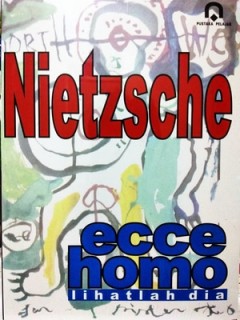
Ecce Homo = Lihatlah Dia
Akulah yang pertama menemukan kebenaran, Akulah yang pertama merasakan dengan indera - mencium - dusta sebagai dusta. Telah kupilih untuk diriku sendiri kata imoralis sebagai marka pembeda dan lencana kehormatan, Aku bangga memiliki kata ini yang mempersiapkan aku melawan segenap kemanusiaan - (Friedrich Nietzsche, Mengapa Aku Adalah Takdir)-
- Edisi
- -
- ISBN/ISSN
- 9799075211
- Deskripsi Fisik
- lvi + 174 hlm.; 20,5 cm.
- Judul Seri
- -
- No. Panggil
- 193 NIE e
 Karya Umum
  Filsafat
  Agama
Agama  Ilmu-ilmu Sosial
  Bahasa
  Ilmu-ilmu Murni
  Ilmu-ilmu Terapan
  Kesenian, Hiburan, dan Olahraga
  Kesusastraan
  Geografi dan Sejarah