Ditapis dengan

After Virtue: A Study in Moral Theory
When After Virtue first appeared in 1981, it was recognized as a significant and potentially controversial critique of contemporary moral philosophy. Newsweek called it “a stunning new study of ethics by one of the foremost moral philosophers in the English-speaking world.” Since that time, the book has been translated into more than fifteen foreign languages and has sold over one hundred t…
- Edisi
- Second Edition
- ISBN/ISSN
- 026822105
- Deskripsi Fisik
- xi + 286 pg.; 23 cm.
- Judul Seri
- -
- No. Panggil
- 170.42 MAC a

Ethics in The Conflicts of Modernity: An Essay on Desire, Practical Reasoning…
Alasdair MacIntyre explores some central philosophical, political and moral claims of modernity and argues that a proper understanding of human goods requires a rejection of these claims. In a wide-ranging discussion, he considers how normative and evaluative judgments are to be understood, how desire and practical reasoning are to be characterized, what it is to have adequate self-knowledge, a…
- Edisi
- Reprinted
- ISBN/ISSN
- 978-1-107-17645-4
- Deskripsi Fisik
- xiii + 322 pg.; 23,5 cm.
- Judul Seri
- -
- No. Panggil
- 170 MAC e
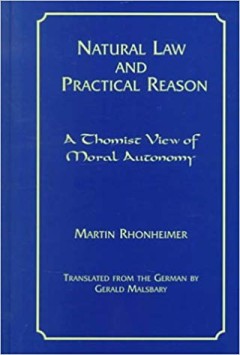
Natural Law and Practical Reason: A Thomist View of Moral Autonomy
Rhonheimer applies moral theology to practical questions, such as, what does it mean to violate the natural law, or to be “unnatural”?
- Edisi
- -
- ISBN/ISSN
- 978-0-8232-1979-7
- Deskripsi Fisik
- xxii + 620 pg.; 23 cm.
- Judul Seri
- -
- No. Panggil
- 171.2 RHO n
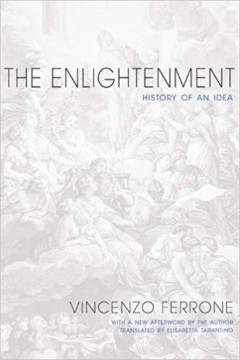
The Enlightenment: History of an Idea
In this concise and powerful book, one of the world's leading historians of the Enlightenment provides a bracing and clarifying new interpretation of this watershed period. Arguing that philosophical and historical interpretations of the era have long been hopelessly confused, Vincenzo Ferrone makes the case that it is only by separating these views and taking an approach grounded in social and…
- Edisi
- Updated Edition
- ISBN/ISSN
- 978-0-691-17576-8
- Deskripsi Fisik
- xvi + 216 pg.; 23,5 cm.
- Judul Seri
- -
- No. Panggil
- 001.09033 FER e

Culture Making: Recovering Our Creative Calling
2009 Christianity Today Book Award winner! Named one of Publishers Weekly's best books of 2008 (religion category) It is not enough to condemn culture. Nor is it sufficient merely to critique culture or to copy culture. Most of the time, we just consume culture. But the only way to change culture is to create culture. Andy Crouch unleashes a stirring manifesto calling Christians to be culture m…
- Edisi
- First Print
- ISBN/ISSN
- 978-08308-3394-8
- Deskripsi Fisik
- 284 pg.; 23,5 cm.
- Judul Seri
- -
- No. Panggil
- 261.0973 CRO c

Humankind: Solidarity with Nonhuman People
What is it that makes humans human? As science and technology challenge the boundaries between life and non-life, between organic and inorganic, this ancient question is more timely than ever. Acclaimed object-oriented philosopher Timothy Morton invites us to consider this philosophical issue as eminently political. In our relationship with nonhumans, we decide the fate of our humanity. Becomin…
- Edisi
- First Print
- ISBN/ISSN
- 978-1-78663-132-9
- Deskripsi Fisik
- x + 205 pg.; 22 cm.
- Judul Seri
- -
- No. Panggil
- 128 MOR h
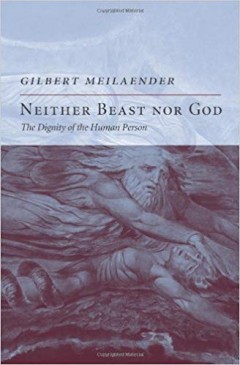
Neither Beast Nor God: The Dignity of the Human Person
Appeals to “human dignity” are at the core of many of the most contentious social and political issues of our time. But these appeals suggest different and at times even contradictory ways of understanding the term. Is dignity something we all share equally, and therefore the reason we all ought to be treated as equals? Or is it what distinguishes some greater and more admirable human being…
- Edisi
- First Print
- ISBN/ISSN
- 978-1-59403-257-8
- Deskripsi Fisik
- 118 pg.; 23,5 cm.
- Judul Seri
- -
- No. Panggil
- 128 MEI n

The Catholic Enlightenment: The Forgotten History of a Global Movement
The Catholic Enlightenment The Forgotten History of a Global Movement Ulrich L. Lehner A radically revisionst history of the eighteenth-century buttressed by a vivid narrative Offers a global perspective on Catholic reformers of the time
- Edisi
- First Print
- ISBN/ISSN
- 978-0-19-023291-7
- Deskripsi Fisik
- 257 pg.; 24 cm.
- Judul Seri
- -
- No. Panggil
- 282.0903 LEH c

Before Virtue: Assessing Contemporary Virtue Ethics
Classical virtue ethics, exemplified by Aristotle (d. 322 BC), asked: what can we know of human nature and the virtues by which it is perfected in order to live well? Dominant ethical theories today generally avoid the question of human nature, taking deontological (non-metaphysical) or utilitarian (maximizing perceived social benefit) approaches. Elizabeth Anscombe's 1958 article "Modern Moral…
- Edisi
- First Print
- ISBN/ISSN
- 978-0-8132-2739-9
- Deskripsi Fisik
- x + 280 pg.; 22,5 cm.
- Judul Seri
- -
- No. Panggil
- 171.3 SAN b

Exemplarist Moral Theory
In this book Linda Zagzebski presents an original moral theory based on direct reference to exemplars of goodness, modeled on the Putnam-Kripke theory which revolutionized semantics in the seventies. In Exemplarist Moral Theory, exemplars are identified through the emotion of admiration, which Zagzebski argues is both a motivating emotion and an emotion whose cognitive content permits the mappi…
- Edisi
- First Print
- ISBN/ISSN
- 978-0-19-065584-6
- Deskripsi Fisik
- xiii + 274 pg.; 24,5 cm.
- Judul Seri
- -
- No. Panggil
- 171 ZAG e
 Karya Umum
  Filsafat
  Agama
Agama  Ilmu-ilmu Sosial
  Bahasa
  Ilmu-ilmu Murni
  Ilmu-ilmu Terapan
  Kesenian, Hiburan, dan Olahraga
  Kesusastraan
  Geografi dan Sejarah