Ditapis dengan

Kolam: Buku Puisi
"Di tangannya, kata seolah mendapatkan tuah. Ungkapan verbal lumrah dalah puisi Sapardi menjelmakan sebuah 'dunia di seberang bahasa' yang enigmatik, tempat segalanya terlihat begitu bening tapi sekaligus tak tertembus, begitu akrab namun selalu tak tertangkap."
- Edisi
- Cetakan Ke-2
- ISBN/ISSN
- 978-602-03-3962-7
- Deskripsi Fisik
- 125 hlm.; 21 cm.
- Judul Seri
- -
- No. Panggil
- 811 DAM k

Negeri Di Ujung Tanduk
Di Negeri di Ujung Tanduk kehidupan semakin rusak, bukan karena orang jahat semakin banyak, tapi semakin banyak orang yang memilih tidak peduli lagi. Di Negeri di Ujung Tanduk, para penipu menjadi pemimpin, para pengkhianat menjadi pujaan, bukan karena tidak ada lagi yang memiliki teladan, tapi mereka memutuskan menutup mata dan memilih hidup bahagia sendirian. Tapi di Negeri di Ujung Tan…
- Edisi
- Cetakan Ke-16
- ISBN/ISSN
- 9789792294293
- Deskripsi Fisik
- 360 hlm.; 20 cm.
- Judul Seri
- -
- No. Panggil
- 813.301 LIY n

Berjuta Rasanya
Untuk kita, yang terlalu malu walau sekadar menyapanya, terlanjur bersemu merah, dada berdegup lebih kencang, keringat dingin di jemari, bahkan sebelum sungguhan berpapasan. Untuk kita, yang merasa tidak cantik, tidak tampan, selalu merasa keliru mematut warna baju dan pilihan celana, jauh dari kemungkinan menggapai cita-cita perasaan. Untuk kita, yang hanya berani menulis kata-kata dalam b…
- Edisi
- Cetakan Ke-31
- ISBN/ISSN
- 978-602-9474-03-9
- Deskripsi Fisik
- vi + 205 hlm.; 20,5 cm.
- Judul Seri
- -
- No. Panggil
- 813.301 LIY b
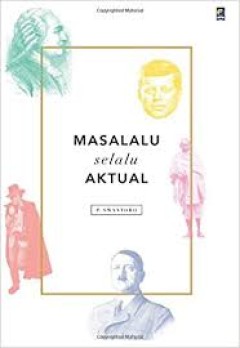
Masalalu Selalu Aktual
Buku ini merupakan jilid kedua atau jiid terakhir dari seri Masalalu Selalu Aktual. Sebagaimana jilid pertama, buku ini menyajikan catatan Polycarpus Swantoro— Wakil Pemimpin Redaksi Harian Kompas dari 1966 hingga 1989—terhadap sisi lain kehidupan seorang manusia dalam kemelut sejarah. Dimuat di harian Kompas dalam periode 1978–1989 dalam rubrik “Fokus Peristiwa Pekan Ini”. P…
- Edisi
- Cetakan Ke-4
- ISBN/ISSN
- 978-602-6208-25-5
- Deskripsi Fisik
- xxxvii + 398 hlm.; 21 cm.
- Judul Seri
- -
- No. Panggil
- 920.02 SWA m
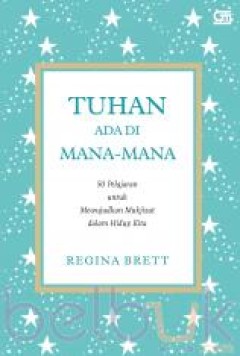
Tuhan Ada Di Mana-mana: 50 Pelajaran Untuk Mewujudkan Mukjizat Dalam Hidup Kita
Kita mudah sekali merasa terbebani masalah, dan kadang berbisik, ”Hanya Tuhan yang bisa menolong.” Lalu, kita menunggu dan menunggu pertolongan Tuhan tanpa menyadari bahwa pertolongan Tuhan sesungguhnya sangat dekat. Tuhan itu Mahabaik, Dia selalu siap memberikan pertolongan-Nya. Tuhan memberikan mukjizatnya melalui orang-orang “biasa” di sekitar kita. Kita pun mungkin menjadi perpan…
- Edisi
- Cetakan Ke-3
- ISBN/ISSN
- 978-979-22-7974-0
- Deskripsi Fisik
- xiv + 335 hlm.; 20 cm.
- Judul Seri
- -
- No. Panggil
- 242.5 BRE t

Cinta Tak Ada Mati dan Cerita-cerita Lainnya
Kematian perempuan itu sama sekali tak menghentikan cintanya, sebaliknya cinta itu semakin menjadi-jadi. Setelah menjadi bangkai, tiba-tiba perempuan itu menjadi setengah dewa, dan ia semakin memujanya, la menghabiskan tiga malam penuh insomnia, di mana setelah bertahun-tahun ia menangis begitu menyedihkan dan berdoa dengan serampangan agar Tuhan mengembalikan perempuan itu ke dunia, dengan car…
- Edisi
- Cetakan Ke-2
- ISBN/ISSN
- 978-602-03-8635-5
- Deskripsi Fisik
- v + 153 hlm.; 21 cm.
- Judul Seri
- -
- No. Panggil
- 813 KUR c.a

Oliver Twist
“Please , sir, I want some more.”
- Edisi
- First Published
- ISBN/ISSN
- 9786020361086
- Deskripsi Fisik
- 664 pgs.; 18 cm.
- Judul Seri
- English Classics
- No. Panggil
- 823 DIC o

Daddy-Long-Legs
"I suppose I might call you Dear Mr. Girl-Hater. Only that’s sort of insulting to me. Or Dear Mr. Rich-Man, but that’s insulting to you. But at least you will stay tall all your life! So I’ve decided to call you Dear Daddy-Long-Legs. I hope you won’t mind."
- Edisi
- First Published
- ISBN/ISSN
- 978-602-03-3446-2
- Deskripsi Fisik
- 200 pgs.; 18 cm.
- Judul Seri
- English Classics
- No. Panggil
- 823 WEB d

Northanger Abbey
"If adventures will not befall a young lady in her own village, she must seek them abroad."
- Edisi
- First Published
- ISBN/ISSN
- 9786020387147
- Deskripsi Fisik
- 328 pgs.; 18 cm.
- Judul Seri
- English Classics
- No. Panggil
- 823 AUS n

The Adventures of Huckleberry Finn
“Don’t ask me nothing-then I won’t have to tell no lies.”
- Edisi
- First Published
- ISBN/ISSN
- 9786020385389
- Deskripsi Fisik
- 440pgs.; 18 cm.
- Judul Seri
- English Classics
- No. Panggil
- 823 TWA a
 Karya Umum
  Filsafat
  Agama
Agama  Ilmu-ilmu Sosial
  Bahasa
  Ilmu-ilmu Murni
  Ilmu-ilmu Terapan
  Kesenian, Hiburan, dan Olahraga
  Kesusastraan
  Geografi dan Sejarah