Ditapis dengan

Theology, Church and Ministry
This summer John Macquarrie retires from his professional chair at Oxford after a long and distinguished career. As well as writing many books which have become classics, and pushing the boundaries of theological exploration further, he has always been devotedly a churchman, and this new collection of papers deals with many topics of particular interest at present. Those essays dealing with the…
- Edisi
- First Published
- ISBN/ISSN
- 0-8245-0787-8
- Deskripsi Fisik
- x + 211 pgs.; 21,5 cm.
- Judul Seri
- -
- No. Panggil
- 230.3 MAC t
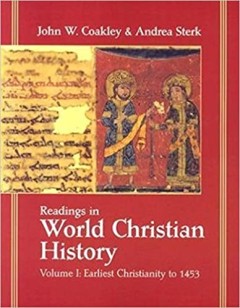
Readings in World Christian History Volume I : Earliest Christianity to 1453
Through the advice of many scholars of Christian origins the selections here include texts that show students how Christianity developed and was lived in Asia, Africa, and the Mediterranean. These texts show Christian life beyond the confines of Byzantine and Western Christendom as Christians enter the Mongol and Chinese courts, struggle to cope with Islam, and continue to live in places such a…
- Edisi
- First Published
- ISBN/ISSN
- 1-57075-520-5
- Deskripsi Fisik
- xi + 435 pgs.; 23 cm.
- Judul Seri
- -
- No. Panggil
- 270 REA r
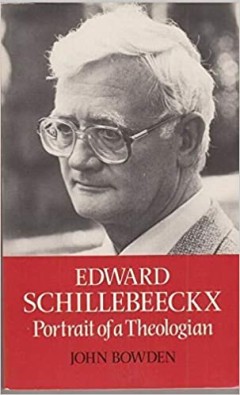
Edward Schillebeeckx : Portrait of a Theologian
- Edisi
- First Published
- ISBN/ISSN
- 334-01447-6
- Deskripsi Fisik
- x + 165 pgs.; 21,5 cm.
- Judul Seri
- -
- No. Panggil
- 230 BOW e
- Edisi
- First Published
- ISBN/ISSN
- 334-01447-6
- Deskripsi Fisik
- x + 165 pgs.; 21,5 cm.
- Judul Seri
- -
- No. Panggil
- 230 BOW e

She Who Is : The Mystery of God in Feminist Theological Discourse
- Edisi
- First Published
- ISBN/ISSN
- 0-8245-1162-X
- Deskripsi Fisik
- xii + 316 pgs.; 23 cm.
- Judul Seri
- -
- No. Panggil
- 231.4 JOH s
- Edisi
- First Published
- ISBN/ISSN
- 0-8245-1162-X
- Deskripsi Fisik
- xii + 316 pgs.; 23 cm.
- Judul Seri
- -
- No. Panggil
- 231.4 JOH s

City of Night
When John Rechy's explosive first novel, City of Night, was first published in 1963, it became a national bestseller and ushered in a new era of gay fiction. Bold and inventive in his account of the urban underworld of male prostitution, Rechy is equally unflinching in his portrayal of one hustling "Youngman" and his restless search for self-knowledge. As the narrator careens from El Paso to Ti…
- Edisi
- First Published
- ISBN/ISSN
- 0-8021-3083-6
- Deskripsi Fisik
- xvii + 380 pgs.; 21 cm.
- Judul Seri
- -
- No. Panggil
- 813.54 REC c
How to Make Sense of God
Does God exist? In this modern, scientific age, is it still reasonable to believe in God? Does God cause evil? How can an "all-good" God allow the suffering of innocent children? In 65 brief, readable chapters,How to Make Sense of God answers these and many other basic questions about God's love and care, the pgift of human freedom, and the real power of prayer. Wijngaards shows clearly and con…
- Edisi
- First Published
- ISBN/ISSN
- 1-55612-821-5
- Deskripsi Fisik
- xi + 327 pgs.; ils.; 21,5 cm.
- Judul Seri
- -
- No. Panggil
- 239 WIj h
The Challenge Of Basic Christian Communities
- Edisi
- First Published
- ISBN/ISSN
- 0-88344-503-4
- Deskripsi Fisik
- xx + 283 pgs.; 23,5 cm.
- Judul Seri
- -
- No. Panggil
- 261.8 CHA c
- Edisi
- First Published
- ISBN/ISSN
- 0-88344-503-4
- Deskripsi Fisik
- xx + 283 pgs.; 23,5 cm.
- Judul Seri
- -
- No. Panggil
- 261.8 CHA c
Church : Community for the Kingdom
Integrating missiology and ecclesiology in a vision of a church in mission made up of all the world's peoples, Fuellenbach explores the church's life as worshiping community, as communion, as Body of Christ working to make the world reflect Kingdom values.
- Edisi
- First Published
- ISBN/ISSN
- 971-510-150-X
- Deskripsi Fisik
- 334 pgs.; 23 cm.
- Judul Seri
- -
- No. Panggil
- 231.72 FUE c
Jesus and the Theology of Israel
Using as its starting point Nostra Aetate, the historic declaration on Catholicism's relationship to non Christian religions issued in 1965 by Vatican Council II, Father Pawlikowski proceeds to examine contemporary Christology and Judaism, and then incarnational Christology and the continuing vitality of Judaism.
- Edisi
- First Published
- ISBN/ISSN
- 0-89453-683-4
- Deskripsi Fisik
- 99 hlm.; 21,5 cm.
- Judul Seri
- -
- No. Panggil
- 231.76 PAW j
Pastoral Paroki Masa Kini : Arah Dasar
- Edisi
- Cetakan ke-2
- ISBN/ISSN
- -
- Deskripsi Fisik
- iv + 68 hlm.; 18 cm.
- Judul Seri
- -
- No. Panggil
- 263 TON p
- Edisi
- Cetakan ke-2
- ISBN/ISSN
- -
- Deskripsi Fisik
- iv + 68 hlm.; 18 cm.
- Judul Seri
- -
- No. Panggil
- 263 TON p
 Karya Umum
  Filsafat
  Agama
Agama  Ilmu-ilmu Sosial
  Bahasa
  Ilmu-ilmu Murni
  Ilmu-ilmu Terapan
  Kesenian, Hiburan, dan Olahraga
  Kesusastraan
  Geografi dan Sejarah