Ditapis dengan

Alfred North Whitehead: The Man and His Work Volume 1: 1861-1910
- Edisi
- -
- ISBN/ISSN
- 0801824885
- Deskripsi Fisik
- xi + 351 pg.; 23,5 cm.
- Judul Seri
- -
- No. Panggil
- 192 LOW a 1
- Edisi
- -
- ISBN/ISSN
- 0801824885
- Deskripsi Fisik
- xi + 351 pg.; 23,5 cm.
- Judul Seri
- -
- No. Panggil
- 192 LOW a 1

The Cambridge Companion to Locke
The essays in this volume provide a systematic survey of Locke's philosophy informed by the most recent scholarship. They cover Locke's theory of ideas, his philosophies of body, mind, language, and religion, his theory of knowledge, his ethics, and his political philosophy. There are also chapters on Locke's life and subsequent influence. New readers and nonspecialists will find this the most …
- Edisi
- -
- ISBN/ISSN
- 0521387728
- Deskripsi Fisik
- x + 329 pg.; 23 cm.
- Judul Seri
- -
- No. Panggil
- 192 CAM c.L
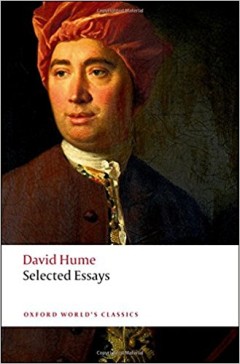
Selected Essays
In his writings, David Hume set out to bridge the gap between the learned world of the academy and the marketplace of polite society. This collection, drawing largely on his Essays Mortal, Political, and Literary (1776 edition), comprehensively shows how far he succeeded. As seen in these selections, Hume embraces a staggering range of social, cultural, political, demographic, and historical c…
- Edisi
- -
- ISBN/ISSN
- 0192836218
- Deskripsi Fisik
- xxvi + 410 pg.; 19,5 cm.
- Judul Seri
- -
- No. Panggil
- 192 HUM s
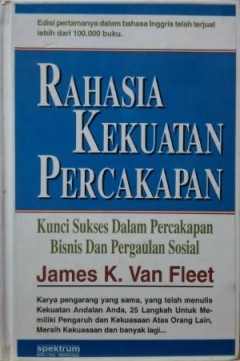
Rahasia Kekuatan Percakapan: Kunci Sukses dalam Bisnis dan Pergaulan Sosial
- Edisi
- -
- ISBN/ISSN
- 9798046803
- Deskripsi Fisik
- xxxiv + 400 hlm.; 20 cm.
- Judul Seri
- -
- No. Panggil
- 153.6 FLE r
- Edisi
- -
- ISBN/ISSN
- 9798046803
- Deskripsi Fisik
- xxxiv + 400 hlm.; 20 cm.
- Judul Seri
- -
- No. Panggil
- 153.6 FLE r

Groundless Grounds: A study of Wittgeinstein and Heidegger
Ludwig Wittgenstein and Martin Heidegger are two of the most important -- and two of the most difficult--philosophers of the twentieth century, indelibly influencing the course of continental and analytic philosophy, respectively. In Groundless Grounds, Lee Braver argues that the views of both thinkers emerge from a fundamental attempt to create a philosophy that has dispensed with everything t…
- Edisi
- -
- ISBN/ISSN
- 9780262016896
- Deskripsi Fisik
- xvi + 354 pg.; 23,5 cm.
- Judul Seri
- -
- No. Panggil
- 192 BRA g

Hannah Arendt: Life is a Narrative
In this volume, based on the series of Alexander Lectures she delivered at the University of Toronto, Julia Kristeva explores the philosophical aspects of Hannah Arendt's work: her understanding of such concepts as language, self, body, political space, and life. Kristeva's aim is to clarify contradictions in Arendt's thought as well as correct misapprehensions about her political and philosoph…
- Edisi
- -
- ISBN/ISSN
- 0802035213
- Deskripsi Fisik
- 100 pg.; 27 cm.
- Judul Seri
- -
- No. Panggil
- 191 KRI h
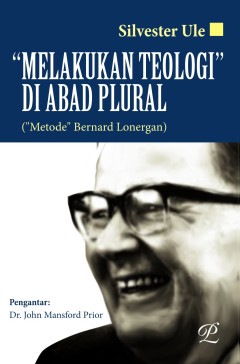
Melakukan Teologi Di Abad Plural ("Metode " Bernard Lonergan)
Keseluruhan tulisan ini adalah perkenalan umum terhadap ”metode” Lonergan dalam teologi. Pada bab pertama, penulis berusaha memberi pengantar tentang situasi dunia dengan pelbagai tantangannya yang kompleks pada pelbagai level: kognitif, eksistensial dan spiritual. Dalam situasi yang kompleks ini, maka yang dibutuhkan kiranya bukanlah teknik atau resep siap pakai tertentu yang tinggal diter…
- Edisi
- -
- ISBN/ISSN
- 9786021161040
- Deskripsi Fisik
- xxxiv + 426 hlm.; 21 cm.
- Judul Seri
- -
- No. Panggil
- 149.97 ULE m

Nietzsche and Postmodernism
In the POSTMODERN ENCOUNTERS series, Dave Robinson explains the key ideas of this Anti-Christ philosopher and then provides a clear account of the central themes of postmodernist thought exemplified by such thinkers as Derrida, Foucault, Lyotard and Rorty.
- Edisi
- -
- ISBN/ISSN
- 1840460938
- Deskripsi Fisik
- 77 pg.; 17,5 cm.
- Judul Seri
- -
- No. Panggil
- 193 ROB n

Etika Moral: Pembenaran Tindakan Sosial
- Edisi
- -
- ISBN/ISSN
- -
- Deskripsi Fisik
- vii + 309 hlm.; 24 cm.
- Judul Seri
- -
- No. Panggil
- 170 HEL e
- Edisi
- -
- ISBN/ISSN
- -
- Deskripsi Fisik
- vii + 309 hlm.; 24 cm.
- Judul Seri
- -
- No. Panggil
- 170 HEL e
 Karya Umum
  Filsafat
  Agama
Agama  Ilmu-ilmu Sosial
  Bahasa
  Ilmu-ilmu Murni
  Ilmu-ilmu Terapan
  Kesenian, Hiburan, dan Olahraga
  Kesusastraan
  Geografi dan Sejarah